From Fruit to Flavor: Understanding Washed, Natural, and Honey Coffee Processing
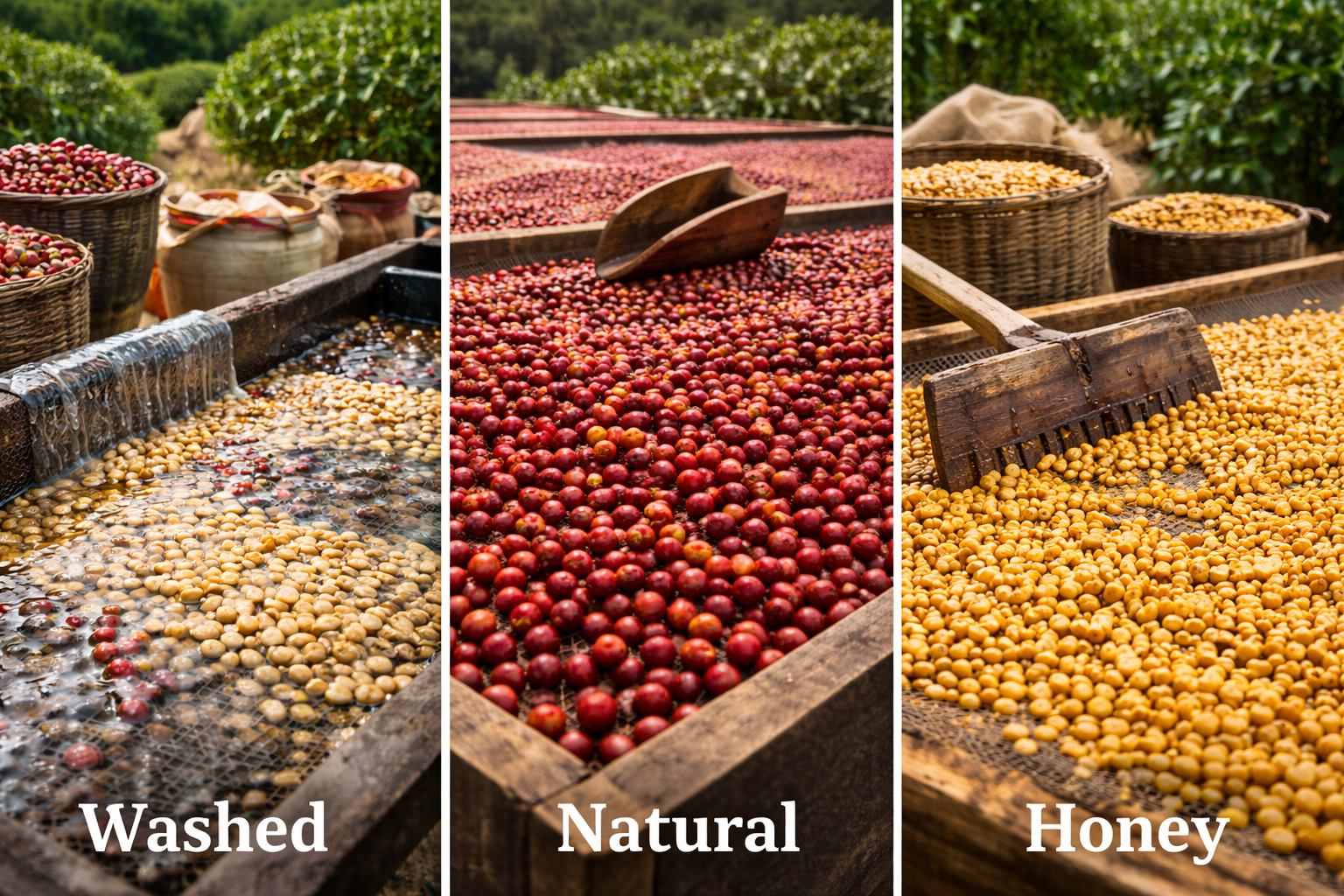
The journey of coffee from the farm to the cup involves several important steps, and one of the most influential stages is the processing method. Coffee processing refers to how the outer layers of the coffee cherry are removed from the bean after harvesting. The method used can significantly affect the flavor, aroma, and body of the final cup. Among the most widely used techniques are the washed, natural, and honey processes, each offering unique characteristics that coffee enthusiasts appreciate.
The washed process, also known as the wet process, involves removing the fruit pulp from the coffee cherry before the beans are fermented and washed with water. This method generally produces a cleaner and brighter flavor profile, often highlighting acidity and delicate tasting notes. Coffees processed this way are known for their clarity and consistency, making them popular in specialty coffee markets where subtle flavors are highly valued.
In contrast, the natural process allows the coffee cherries to dry with the fruit still surrounding the bean. During this drying stage, the sugars from the fruit influence the beans, creating a fuller body and sweeter flavor profile. Natural processed coffees often display fruity or wine-like notes, which can add complexity and depth to the cup. This traditional method is commonly used in regions with strong sunlight and limited water resources.
The honey process falls somewhere between washed and natural methods. In this technique, part of the fruit pulp is removed, but some sticky mucilage remains on the bean during drying. This creates a balanced flavor profile that often combines the clarity of washed coffee with the sweetness of natural coffee. As a result, honey processed beans are appreciated for their smooth body, gentle sweetness, and layered taste, making them a fascinating choice for coffee lovers exploring different processing styles.

.jpg)