Why Rainfall Shapes Coffee Beans
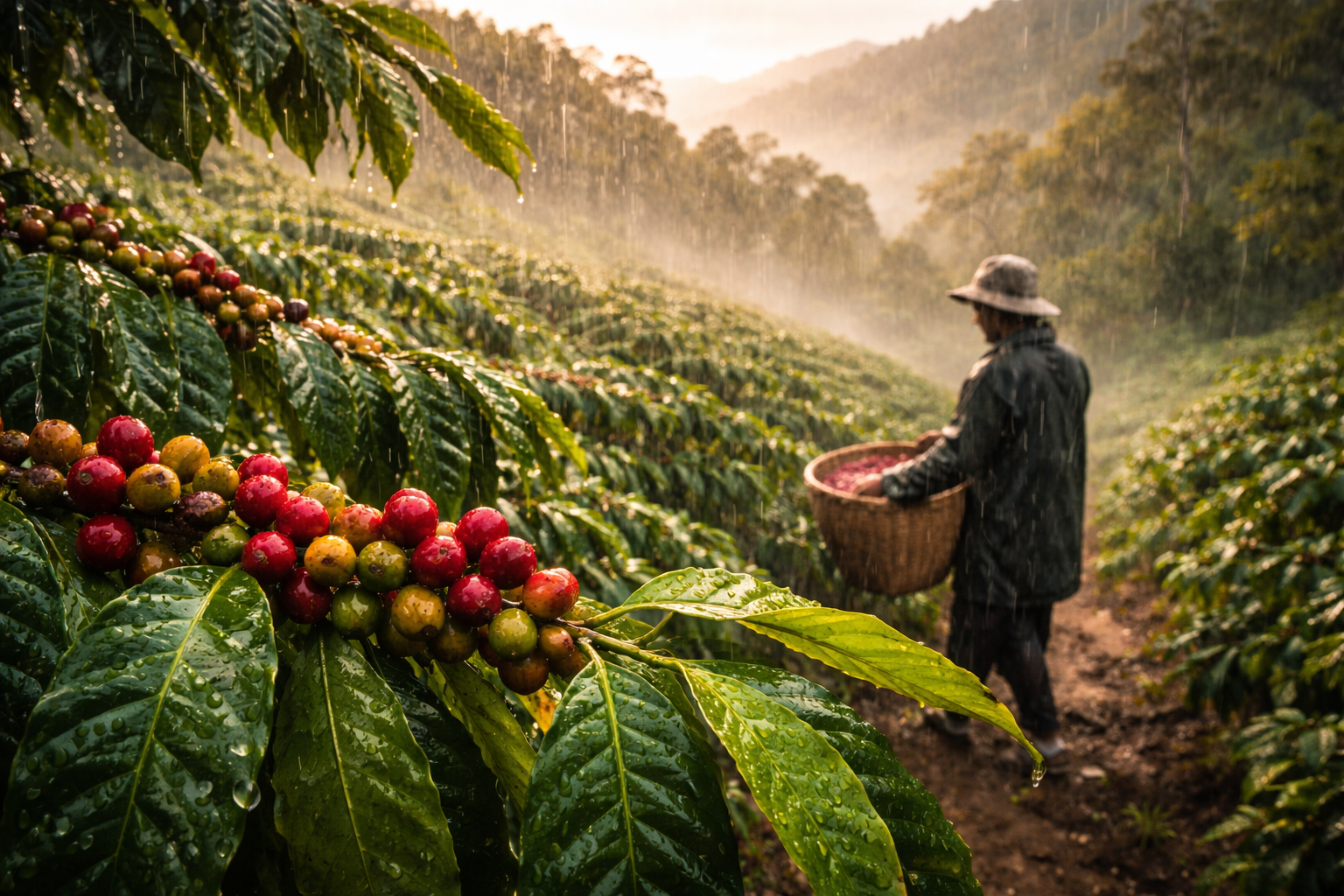
Rainfall plays a surprising role in how coffee beans grow, taste, and develop texture. Coffee plants depend on steady moisture throughout the year, and rain becomes the key ingredient that fuels every stage of their life cycle. When rain arrives in the right pattern, leaves stay healthy, blossoms open beautifully, and cherries grow plump with natural sugars. It’s a natural partnership that determines whether a harvest turns out balanced or stressed.
Too little rain causes the plants to struggle. Without enough water, trees produce fewer flowers, and the berries that do form are often smaller, dry, and slow to ripen. This stress changes the chemistry inside each cherry, often reducing sweetness and aroma. Farmers working in dry years may also see uneven ripening, where some cherries stay green while others turn red too quickly. That inconsistency shows up later in the cup as mixed flavors and lower quality.
On the other hand, too much rain can be just as damaging. Heavy showers sometimes make plants absorb more water than they can handle, leading to swollen cherries that lack flavor concentration. Continuous rain can also wash away nutrients from the soil, leaving plants weaker and more vulnerable to pests or disease. In extreme cases, fruit may split on the branches or fall too early, limiting production and changing the bean density that roasters rely on for even roasting.
The timing of rain matters just as much as the amount. A well-timed rainy season triggers blossoms, and dry spells afterward allow fruits to develop without excess moisture. This natural rhythm ensures sugars form gradually, acids balance out, and flavors become complex rather than diluted. When rain and sunlight take turns in harmony, coffee beans gain the richness, body, and aroma that coffee lovers enjoy.
Rainfall doesn’t just keep plants alive — it shapes their character. The moisture pattern across weeks, months, and seasons changes how cherries fill, how dense beans become, and how flavors unfold in every cup. It’s one of nature’s quiet influences, working behind the scenes to craft sweetness, acidity, smoothness, or strength. That’s why each drop of rain leaves its signature on every harvest — and eventually, every sip.