Brewing Heritage: The Rich Tradition of South Indian Filter Coffee
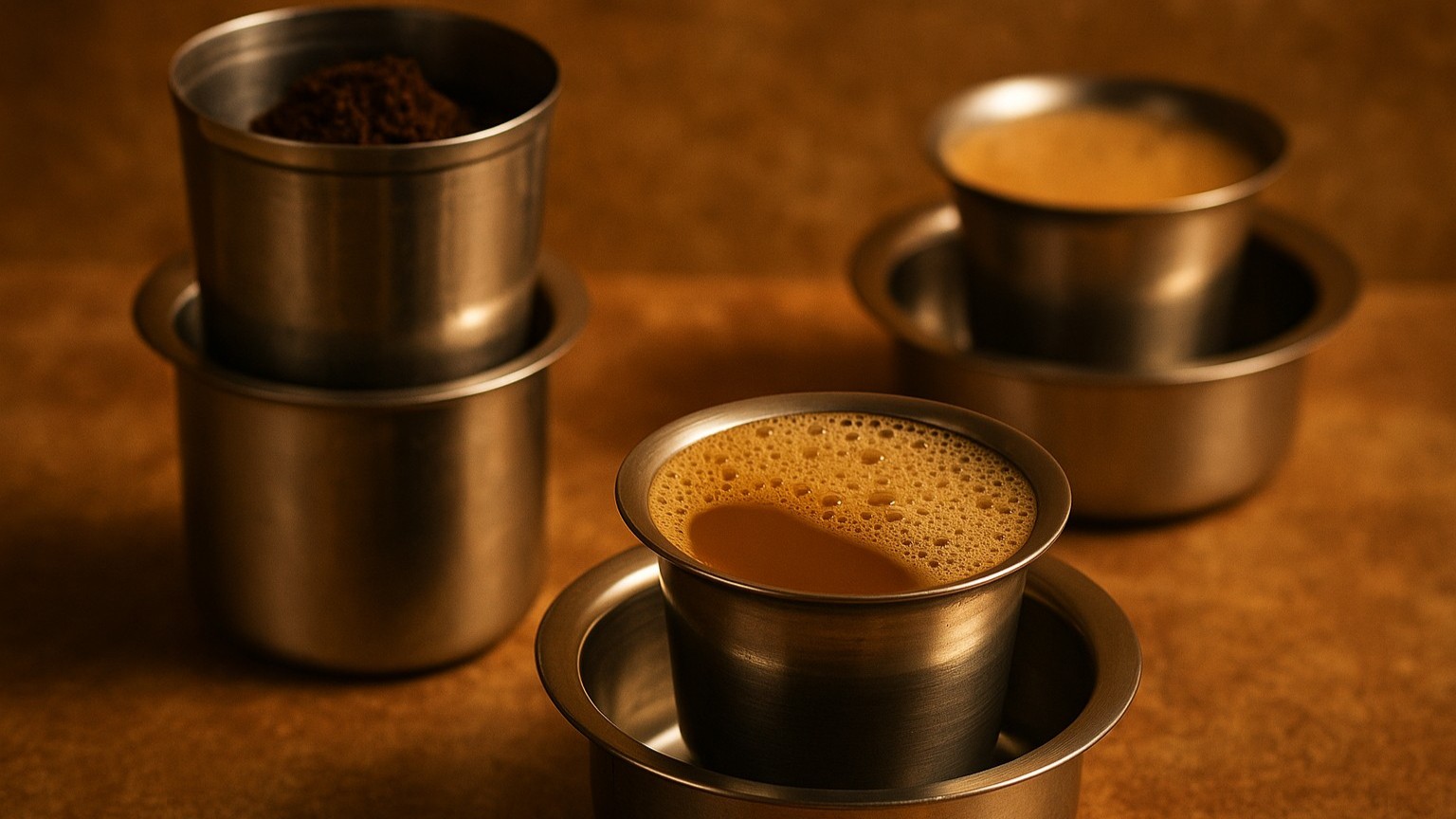
South Indian filter coffee, fondly known as "kaapi," is more than just a beverage—it's a ritual woven into the cultural fabric of southern India. From Tamil Nadu to Karnataka, a morning doesn't truly begin without the comforting aroma of freshly brewed filter coffee filling the air. Served in the iconic steel tumbler and dabarah set, it's a symbol of hospitality, warmth, and cherished daily routines.
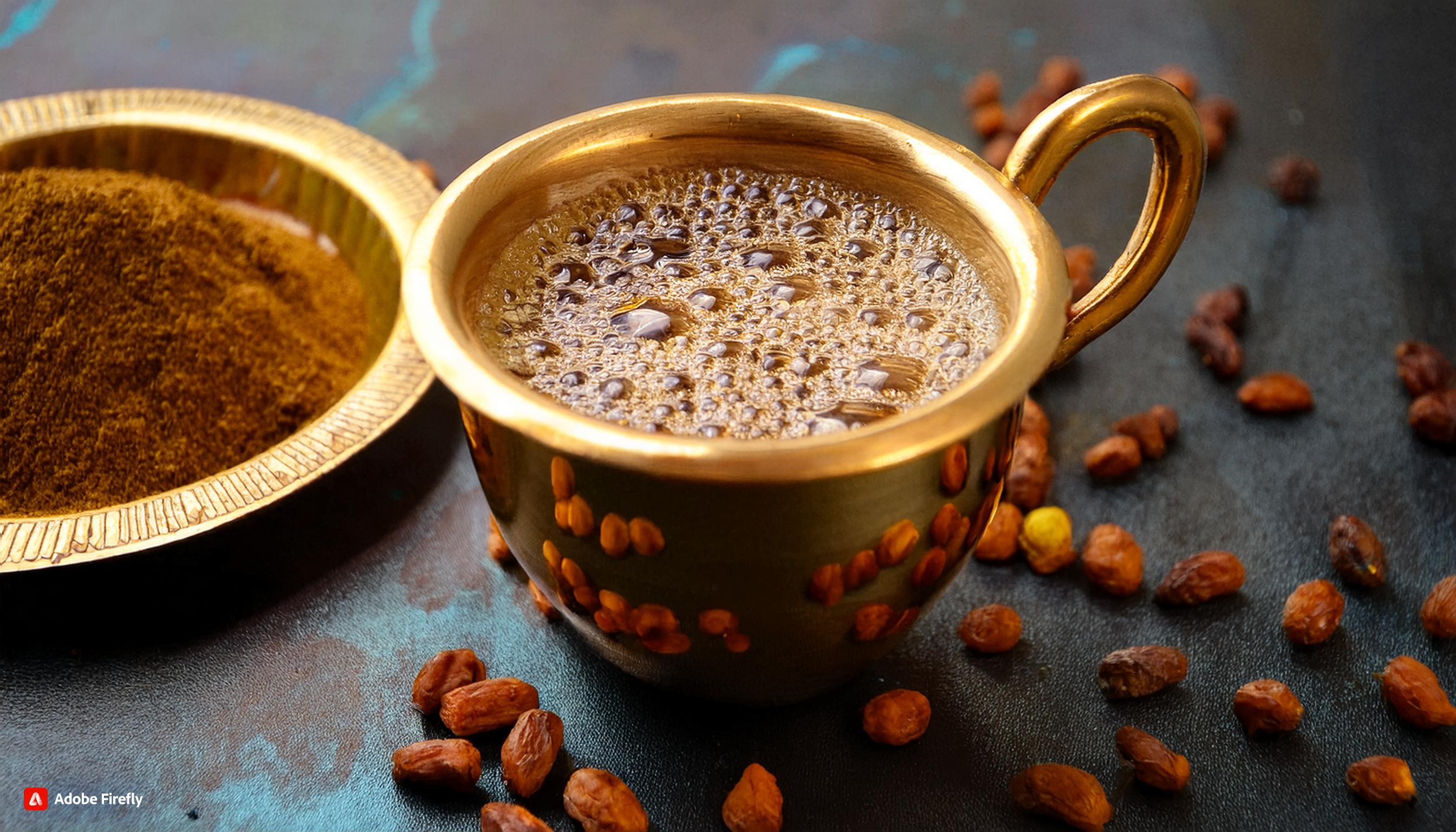
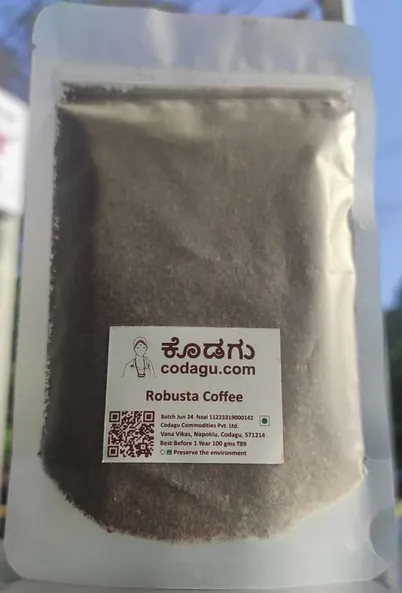
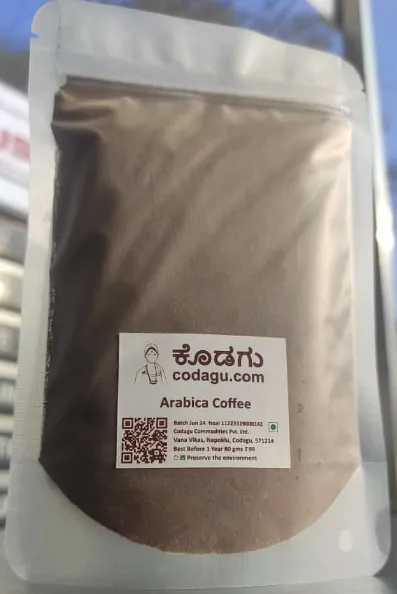
At the heart of this beloved drink is a unique blend of coffee beans, typically 80% coffee and 20% chicory, which gives the brew its distinctive body and flavour. The beans are medium-dark roasted and ground specifically for the traditional metal filter, which slowly extracts a strong, concentrated decoction. This is then mixed with hot milk and sugar to taste, creating a rich, creamy cup that delights the senses.
The brewing process is both an art and a science. The metal filter, consisting of two cylindrical containers, is filled with coffee powder in the upper chamber and pressed with a plunger. Boiling water is poured over, and gravity takes its time, allowing the decoction to drip slowly into the lower chamber. Patience is key, as this slow drip unlocks the full depth of flavour from the beans.
Drinking filter coffee is also about the experience—poured back and forth between the tumbler and dabarah to cool it down and enhance the froth, it becomes a performance in itself. Whether enjoyed at home, in a bustling street-side café, or served to guests as a sign of respect, every cup carries a sense of tradition and pride.
In today’s fast-paced world, South Indian filter coffee remains a gentle reminder to slow down and savour life’s simple pleasures. It's not just a drink; it’s a celebration of heritage, craftsmanship, and the comforting embrace of home.