Smart Roots, Greener Brews: How Technology is Transforming Sustainable Coffee Farming
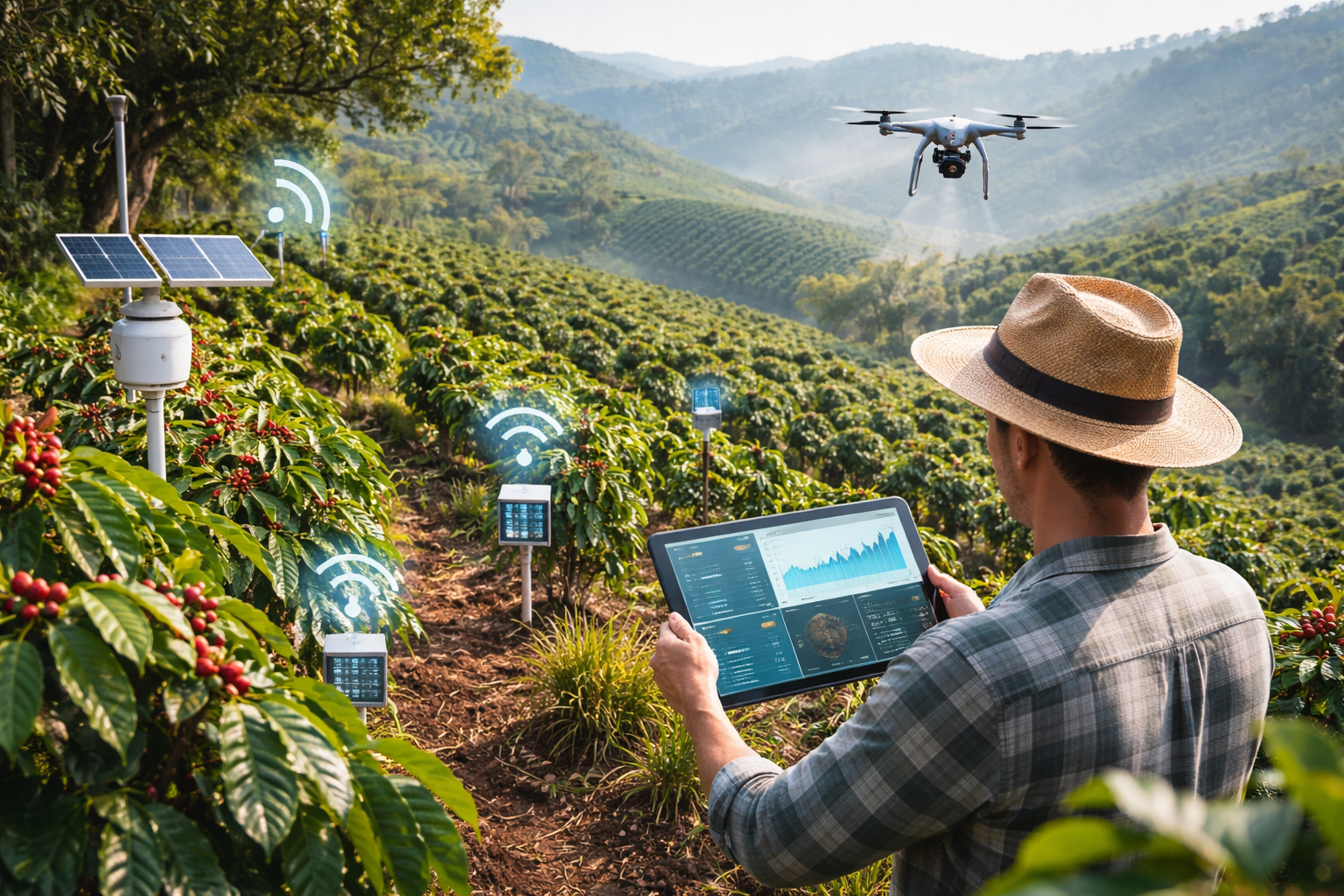
Sustainable coffee farming is entering a new era with the integration of Artificial Intelligence (AI) and the Internet of Things (IoT), offering farmers smarter ways to manage their plantations while protecting the environment. Traditionally, coffee cultivation has depended heavily on manual observation and seasonal experience, but modern challenges such as climate change, unpredictable rainfall, and soil degradation demand more precise and adaptive solutions. AI and IoT technologies are enabling farmers to make data-driven decisions that improve productivity without exhausting natural resources.
One of the key applications of IoT in coffee farming is the use of smart sensors placed across plantations to monitor soil moisture, temperature, humidity, and nutrient levels in real time. These sensors provide continuous feedback, allowing farmers to optimize irrigation and reduce water wastage. Instead of relying on fixed watering schedules, AI-powered systems analyze this data and recommend when and how much water is needed, ensuring that crops receive just the right amount. This not only conserves water but also enhances plant health and yield quality.
AI-driven analytics also play a significant role in pest and disease management. By analyzing images captured through drones or smartphones, AI models can detect early signs of infections or infestations that may not be visible to the human eye. Early detection allows farmers to take targeted action, reducing the need for excessive pesticide use. This approach promotes eco-friendly farming practices while maintaining the quality of the coffee beans, which is increasingly important in global markets that value sustainability.
In addition to crop health, AI and IoT contribute to efficient resource management and long-term planning. Predictive models can forecast weather patterns, helping farmers prepare for droughts or heavy rains in advance. These insights allow for better crop planning, reduced risk, and improved resilience against climate variability. Farmers can also track energy usage and reduce their carbon footprint by optimizing farm operations, making coffee production more environmentally responsible.
The adoption of AI and IoT in coffee farming represents a powerful step toward a sustainable future. By combining traditional knowledge with advanced technology, farmers can protect their land, improve yields, and meet the growing demand for ethically produced coffee. As these technologies become more accessible, they are set to redefine the way coffee is cultivated, ensuring that every cup not only tastes good but also supports a healthier planet.