Sustainable Drops: Water Conservation Techniques in Coffee Estates
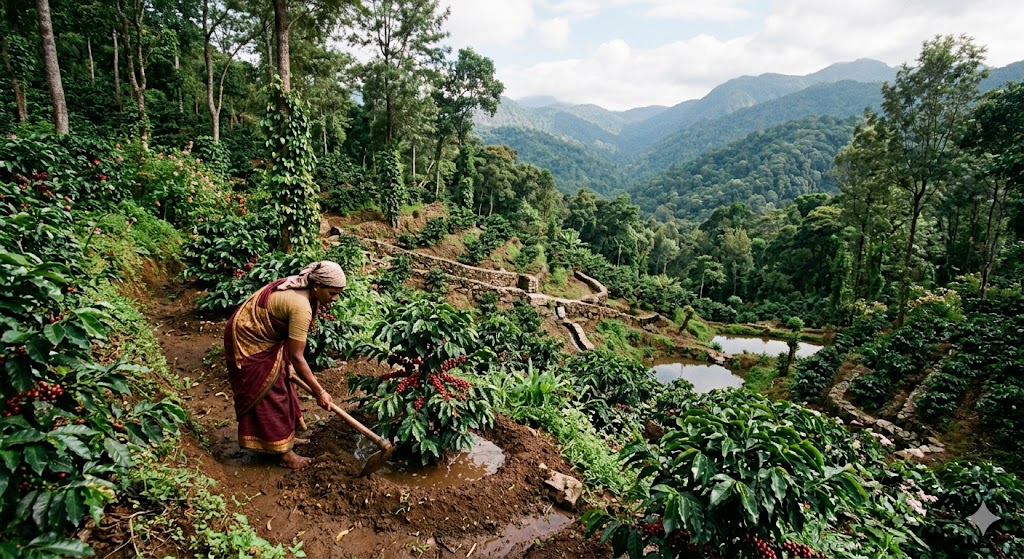
Water conservation has become a critical focus in modern coffee estates as climate variability and resource scarcity continue to affect agricultural productivity. Coffee plantations, especially those located in hilly and rain-fed regions, depend heavily on natural water sources, making efficient water management essential for long-term sustainability. Farmers are increasingly adopting practices that help reduce water wastage while maintaining soil moisture and plant health.
One of the most widely used techniques in coffee estates is rainwater harvesting, where runoff water during monsoons is collected and stored in farm ponds or underground tanks. This stored water is later used during dry periods to irrigate coffee plants and support essential farm operations. In addition to harvesting, contour bunding and terracing are implemented on sloped lands to slow down water flow and improve groundwater recharge.
Drip irrigation systems are also gaining popularity among coffee growers as they deliver water directly to the plant roots in controlled quantities. This method not only reduces water consumption but also minimizes evaporation losses compared to traditional irrigation methods. Mulching with organic materials such as dried leaves and coffee husks further helps retain soil moisture and regulate soil temperature.
Agroforestry practices in coffee estates play an important role in water conservation as well, since shade trees reduce direct sunlight exposure and lower evaporation rates. Combined with proper soil management techniques such as composting and cover cropping, these methods create a balanced ecosystem that retains water more effectively. Together, these techniques ensure that coffee cultivation remains productive while preserving natural water resources for future generations.