From Royal Courts to Modern Cafés: The History of Coffee Houses in Karnataka
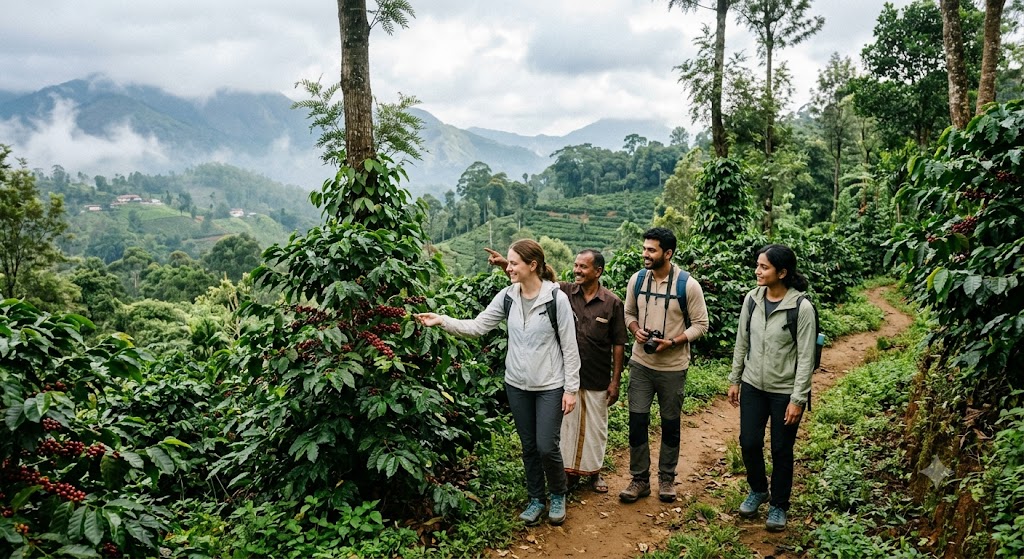
Karnataka holds a special place in India’s coffee culture, not only because it produces a large share of the country’s coffee but also because it shaped the tradition of coffee houses and café gatherings. The story of coffee in Karnataka dates back to the 17th century when Baba Budan is believed to have brought coffee beans from Yemen and planted them in the hills of Chikkamagaluru. Over time, coffee cultivation spread across regions such as Kodagu, Hassan, and Sakleshpur, turning Karnataka into the heart of Indian coffee production. As coffee became a part of daily life, coffee houses slowly emerged as social spaces where people gathered to relax, discuss ideas, and build community connections.
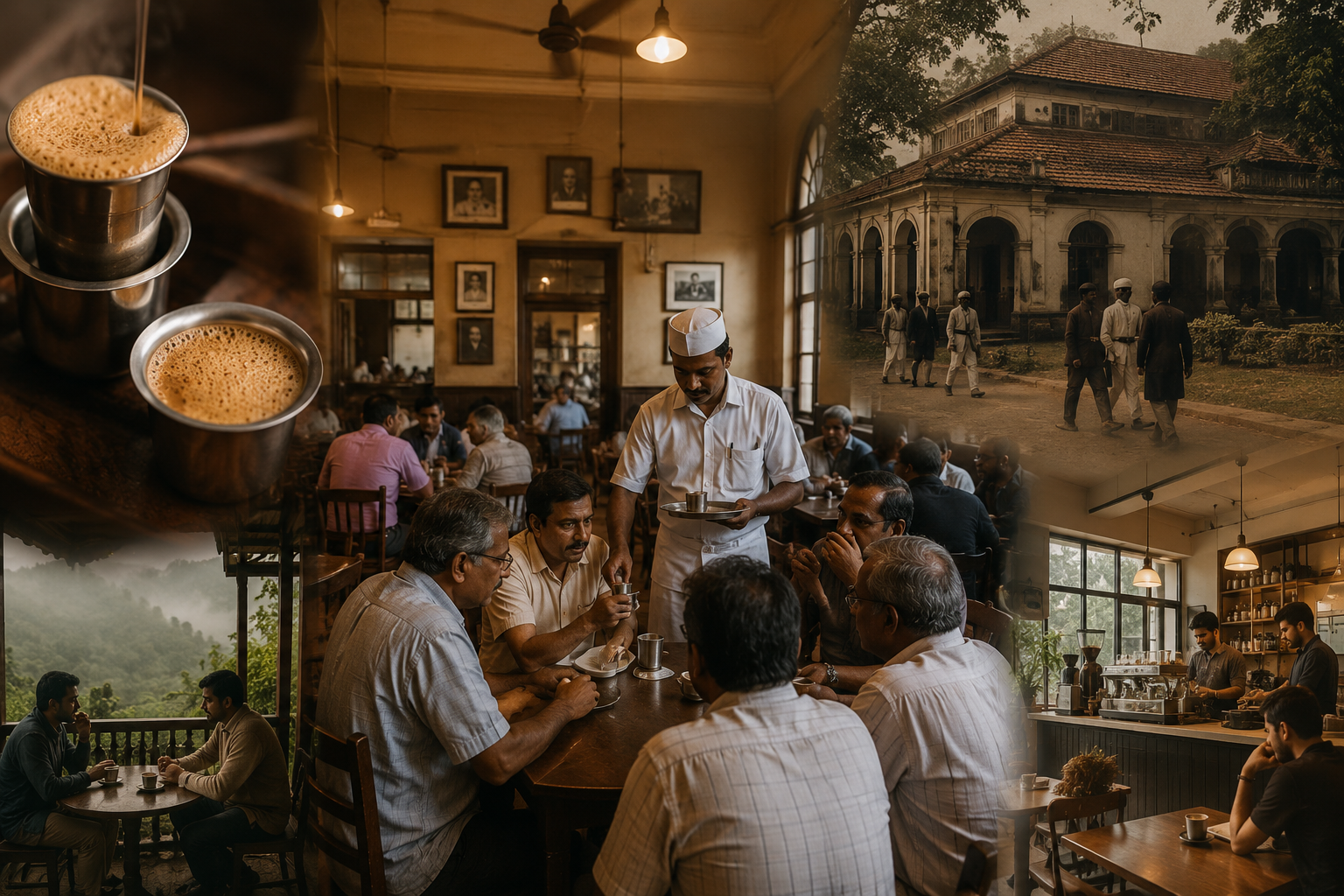
During the British colonial period, coffee houses became more popular in cities like Bengaluru and Mysuru. These establishments were not just places to drink coffee but also centers of conversation, literature, and political discussion. Traditional South Indian filter coffee gained fame during this time, served in steel tumblers with a rich aroma that became closely associated with Karnataka’s hospitality. Small eateries and “darshinis” later carried this tradition forward by offering affordable and quick servings of fresh coffee to workers, students, and travelers.
One of the most important milestones in Karnataka’s coffee house history came with the establishment of the famous Indian Coffee House chain. Managed by worker cooperatives, these coffee houses became iconic meeting places for writers, journalists, students, and intellectuals. Their simple interiors, uniformed waiters, and affordable menus created a welcoming atmosphere that appealed to generations of visitors. In cities such as Bengaluru, these cafés became landmarks where friendships were formed and creative ideas were exchanged over endless cups of filter coffee.
In recent years, Karnataka’s coffee culture has evolved with the rise of modern cafés and specialty coffee roasters. Bengaluru, often called India’s startup capital, now hosts a vibrant café scene that blends traditional brewing techniques with global coffee trends. Many cafés source beans directly from plantations in Kodagu and Chikkamagaluru, highlighting the deep connection between Karnataka’s farms and urban coffee culture. Despite changing lifestyles and modern interiors, the essence of Karnataka’s coffee houses remains the same: they continue to be spaces where people gather, share stories, and celebrate the timeless comfort of a good cup of coffee.
.jpg)